20+
Years Of Experience
Wood Decks Demand Constant Sealing and Board Replacement
Fiberon Decking in Holly for homeowners tired of sanding, staining, and replacing warped boards every few years
Premier Deck & Construction installs Fiberon decking in Holly and the surrounding area for homeowners who want a durable, low-maintenance alternative to traditional wood. If your current deck requires annual staining, shows deep cracks from UV exposure, or has boards that splinter and warp after wet seasons, composite decking eliminates those recurring problems. The installation process involves building or reinforcing the deck frame to support the span requirements of composite boards, fastening the decking with hidden clips or face screws, and finishing the perimeter with fascia and trim that match the board color and texture.
Fiberon boards are made from a blend of recycled wood fiber and polymer resin, which resists moisture absorption, fading, and staining without the need for sealing or painting. The surface is molded with woodgrain textures that replicate the look of natural lumber, and the color is blended through the material rather than applied as a thin surface layer. In Holly, where seasonal freeze-thaw cycles and summer humidity put stress on outdoor materials, Fiberon decking maintains its structure and appearance longer than untreated or pressure-treated wood. The boards do not rot, split, or attract insects, and routine cleaning with soap and water is enough to keep the surface looking consistent.
If you're planning to replace an old deck or build a new outdoor space without committing to yearly maintenance, contact Premier Deck & Construction to review Fiberon color and finish options.
What You Notice After Fiberon Decking Is Installed
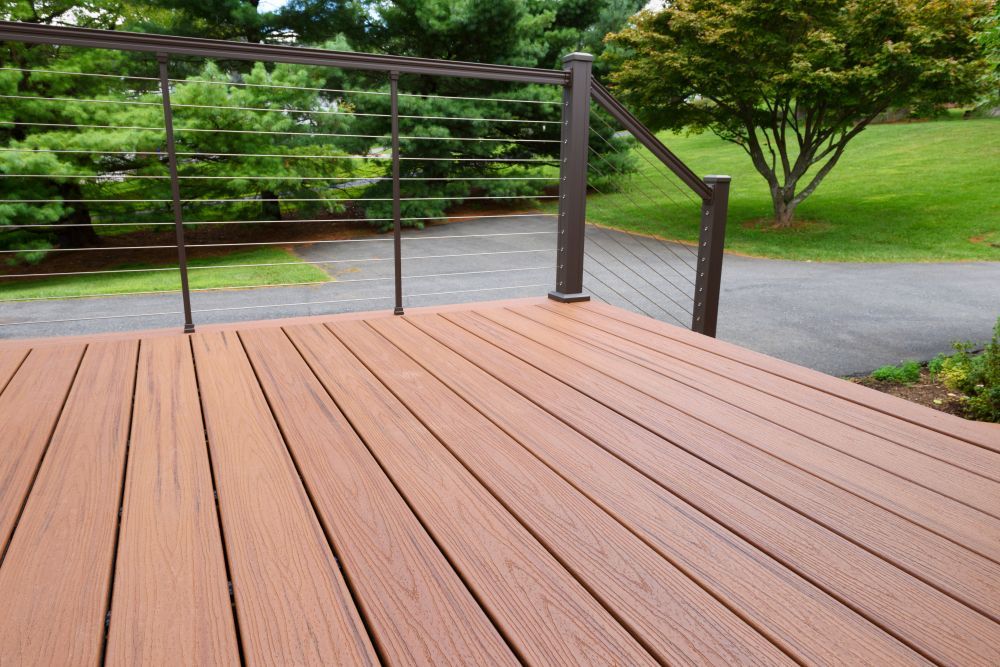
After installation, the deck surface is smooth and even, with consistent color across every board and no visible knots, checks, or grain irregularities. Hidden fasteners create clean sightlines without exposed screw heads, and the spacing between boards is uniform to allow drainage and expansion. The boards feel solid underfoot and do not flex or bounce the way some wood decks do when joists are spaced too wide. You can walk barefoot without worrying about splinters, and the surface stays cooler than darker materials under direct sun.
Premier Deck & Construction spaces joists to meet Fiberon's span requirements, which are often tighter than those for wood decking, and installs blocking at board ends to prevent sagging. Fascia boards are attached to the rim joist to cover the cut ends of the decking and create a finished edge. Stair treads are fastened with the same hidden clip system to maintain a consistent look from the deck surface to the landing. Once the installation is complete, the deck requires no staining, sealing, or sanding, and the color remains stable for years without the fading or graying that affects untreated wood.
Installation includes cutting boards to length, fastening them with the manufacturer's recommended clip or screw system, and installing perimeter fascia. The work does not include demolition of the existing deck frame unless that is part of the scope, and it does not include railings, stairs, or lighting unless those are specified separately. Fiberon boards expand and contract slightly with temperature changes, so gaps are planned at the ends and between boards to allow movement without buckling.
Questions Homeowners Ask Before Choosing Fiberon Decking
These are the most common questions Premier Deck & Construction answers when planning Fiberon installations in Holly and the surrounding area.
What is the difference between capped and uncapped composite decking?
Capped decking has a protective polymer shell around the composite core, which increases resistance to moisture, staining, and fading compared to uncapped boards that expose the core material directly.
How far apart should joists be spaced for Fiberon decking?
Joist spacing depends on the board profile and whether it runs diagonal or perpendicular, but most Fiberon products require joists no more than sixteen inches on center for residential decks.
Why does composite decking cost more upfront than wood?
Composite materials and the capping process add manufacturing costs, but the long-term savings from eliminating staining, sealing, and board replacement usually offset the higher initial price within a few years.
When should you use hidden fasteners instead of face screws?
Hidden fasteners create a cleaner appearance and reduce the number of penetrations in the board surface, which helps maintain the board's moisture resistance and prevents screw head discoloration.
How does Fiberon decking perform in Holly's winter freeze-thaw cycles?
Fiberon boards are engineered to withstand repeated freezing and thawing without cracking or warping, and the capped surface resists moisture infiltration that can cause damage during freeze cycles.
If you're ready to replace your wood deck with a low-maintenance composite system in Holly, reach out to Premier Deck & Construction to discuss Fiberon product lines and plan the installation around your schedule.